Building refurbishment
Industrial valley gutters: when to reline or replace
How to distinguish a failed joint from a drainage or support problem, and what to check before specifying a valley gutter liner or replacement.
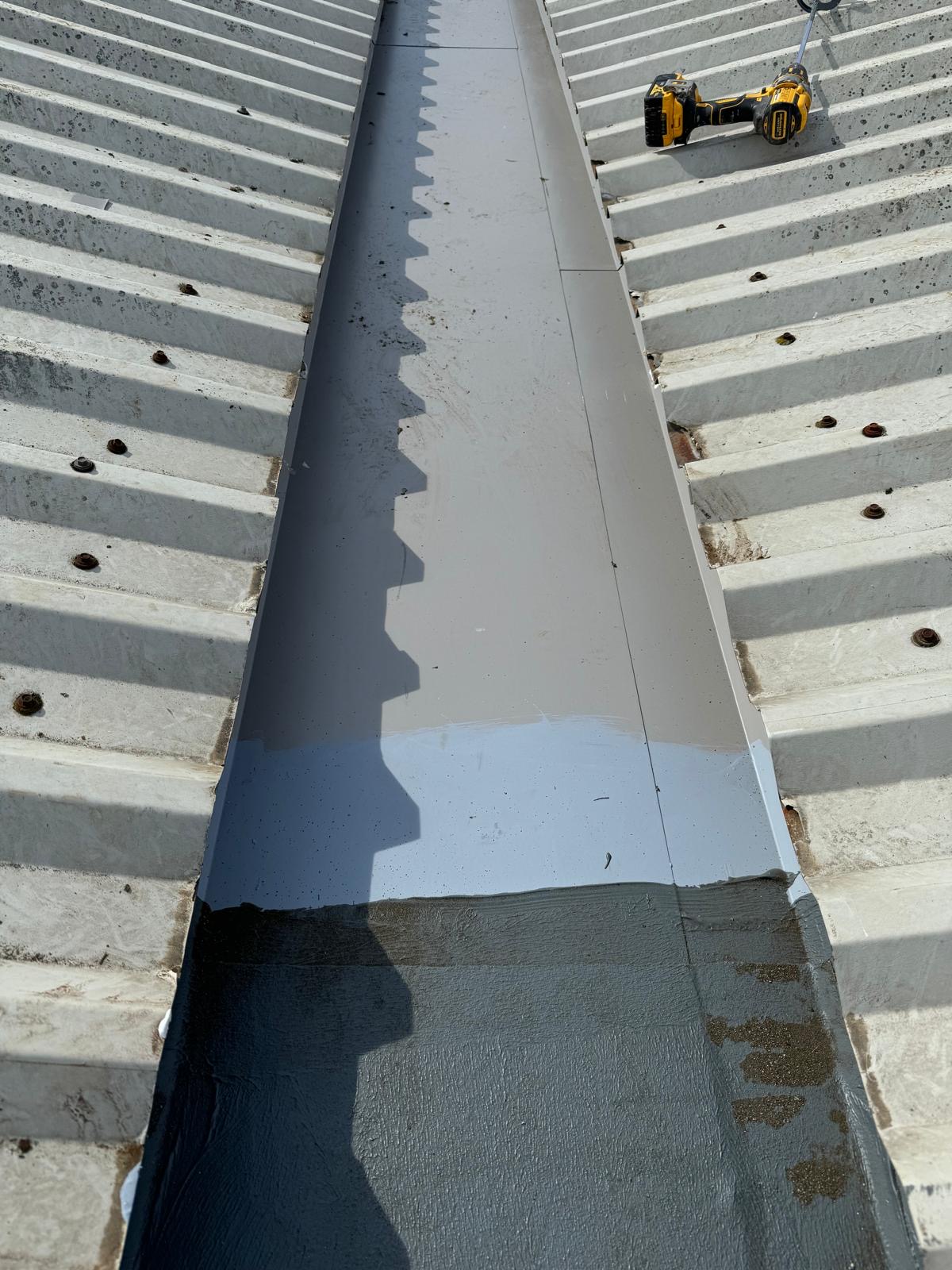
Relining can be an option when the existing valley gutter and its supports can be retained and the liner can be fitted around outlets, ends and roof-sheet edges. Replacement is worth considering where corrosion, failing supports, poor falls or inadequate drainage capacity need to be corrected. For a single leaking joint, a targeted repair may be enough once the cause has been confirmed.
Find where the water is coming from
A valley gutter collects water from two roof slopes. A leak underneath might come from a joint or an outlet, or from water backing up and reaching the roof-sheet edges. Record where water appears indoors, the weather at the time and whether it continues after the rain has passed. Share prior repair records with the surveyor. Ask them to trace the water path and check the gutter together with the roof edges and downpipes.
Compare repair, relining and replacement
| Option | When it can make sense | What to check |
|---|---|---|
| Local repair | A specific joint or detail is failing and the rest is in serviceable condition. | Whether corrosion, standing water or repeat leaks point to a wider issue. |
| Relining | The gutter and supports can be retained, and a suitable liner can be detailed continuously. | Available width and depth, outlets, transitions, movement, falls, sheet edges and how the gutter will be inspected and maintained. |
| Replacement | The gutter or its supports need renewing, or the geometry and drainage need to change. | Which adjacent roof areas must be opened, who checks the drainage design and how the building is protected during the works. |
Ask for the drainage and the roof interface to be checked together
Ask what happens at each outlet, overflow, change in direction and roof-sheet edge. Where the existing system has overflowed, ask whether outlet and downpipe performance or gutter capacity needs to be checked before specifying a liner. Ask for the condition of the gutter and supports to be recorded and for any assumptions about inaccessible areas to be made clear. For examples of complex transitions and outlets in a lining project, see this Sharmans project reference.
What a quotation should spell out
- Which runs, outlets, ends and junctions are included, and what needs to be repaired or replaced first.
- How roof access, temporary protection and work above occupied areas are priced and planned. See HSE roof work guidance.
- What inspection or testing, maintenance information and warranties are included at handover.
The photos in our valley gutter refurbishment case study show the exposed roof-sheet edges and a section during lining. If leaks recur in more than one bay, a commercial roof condition survey can help define which areas need further investigation before the work is priced.
Dealing with a leaking valley gutter?
Tell us the building location, which areas are affected and whether it leaks during heavy rain or after it has stopped. Include any past repairs you know about.
Send a project enquiry